Cup measurements have popped up a few times recently and they can be divisive. I mostly use metric as I live in the UK. My husband, Col, is type 1 diabetic, so a scale sits permanently on our countertop to help with carb counting. It makes weighing ingredients incredibly convenient.
Recently, I’ve been making an effort to include cup measurements where possible, but this blog is maintained around a day job so time is limited.
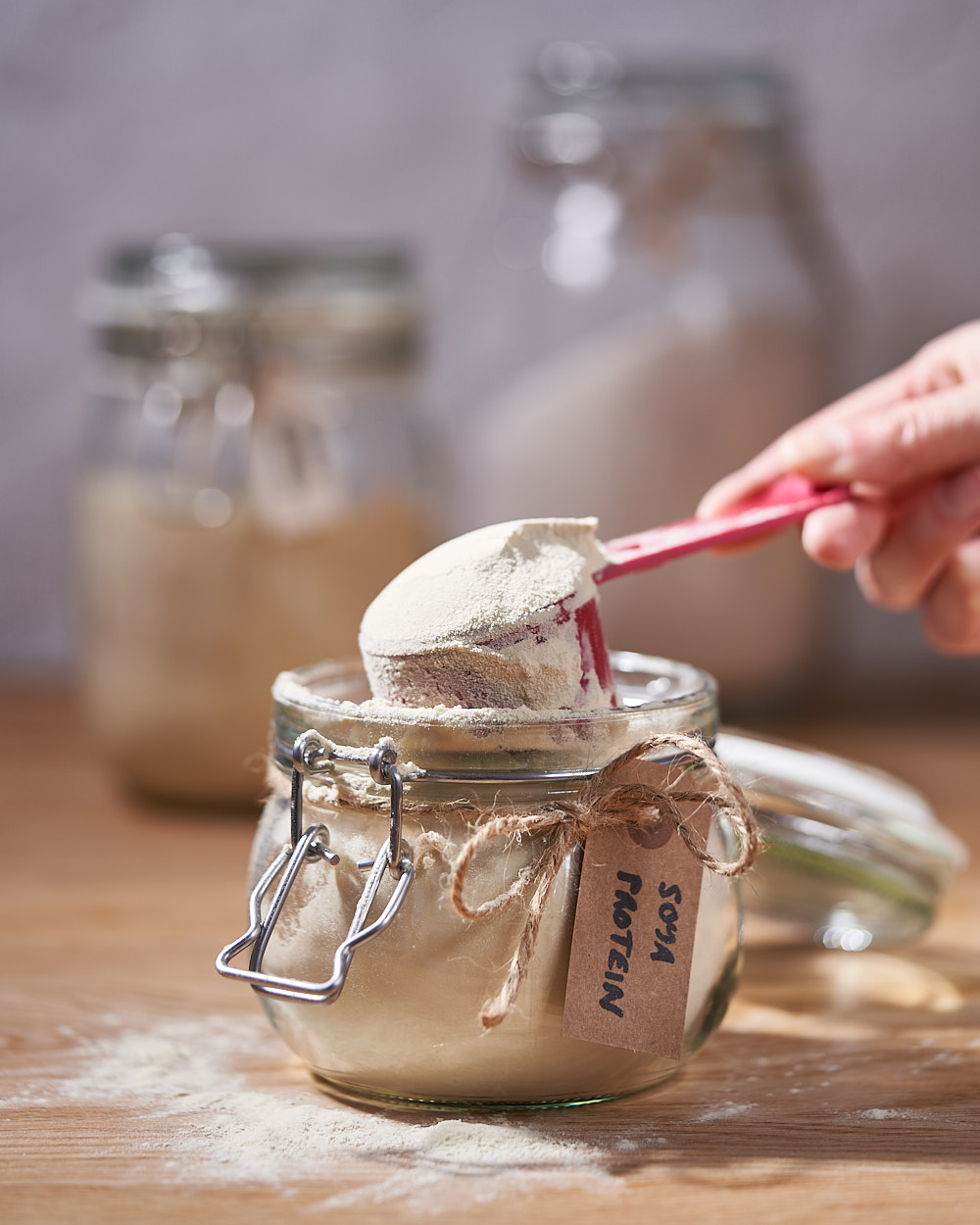
I generally find that recipe testing with cups is more time-consuming than weighing, especially when baking. The mess in the photo wasn’t artistic licence. I dunked my quarter cup into a finely milled protein powder and it exploded all over the table.
My 1-cup measure doesn’t fit into a bag of flour, and some ingredients just don’t sit nicely in a cup (I’m looking at you, spinach and butter). Others, like honey, sticky sauces, or nut butters, require the cup to be oiled first so the ingredient will slide out later.
A while back, I read a great interview with Maria Zizka, an author who Americanises cookbooks*. I loved the whole thing, but the last bit changed how I think about cup measurements.
“This talk of Americanizing cookbooks always begs the question: for something as precise as baking, why do we include the imperial measurements like cups at all? And I get it, most readers who are avid home bakers probably own a kitchen scale and are comfortable using it.
But I will say, on behalf of my fellow Americans who still appreciate cups, that there's something really human about the cup measurement. We can relate our bodies to it, kind of like we know intuitively how much a handful of something is. Inches and feet are the same way for me. I know that my actual foot is approximately the same size as one foot. I know that my thumb nail is exactly half an inch and the line where my thumb knuckle bends is one inch.
This can be very useful when baking! I like using my body in this way when I cook, and so I do feel a certain fondness for those measurements in recipes.”
It’s unlikely that I’ll ever feel as comfortable with cups as I do with metric. But I appreciate that people will always prefer whichever measurement feels most familiar to them, and that’s A-OK.
A quick nose through my favourite food blogs revealed that three have cup-to-metric converters, one uses cups, and another uses grams. I think we’re lucky to have so many recipes at our fingertips and nearly all of them free. Not to mention the huge number of online converters, or even AI**, if we’re so inclined.
One last thing about this blog: it’s hand-coded, so there’s no quick "convert everything" button. And as the interview with Maria highlights, metric-to-imperial conversions need proper testing. I’ll do my best, but metric will always be my go-to, with cup measurements added where time permits.
* Maria Americanised SIFT, an incredible book. To me, it’s the Salt Fat Acid Heat (affiliate link) of baking. I can’t recommend it enough.
** I’ve found ChatGPT to be pretty helpful with conversions and carb calculations. I always double check its output, though, as I’ve found a few small inconsistencies.
The five blogs I checked were:
